
Do You Know What’s on Your Cape Coral Lot?
Burrowing Owls and Gopher Tortoises Can Affect the Sale and Development of Vacant Land
If you own a vacant lot in Cape Coral, there is an issue you should understand before deciding whether to hold, sell or build on your property.
Burrowing owls and gopher tortoises are both State-designated Threatened species in Florida. Their presence on or near a vacant lot can affect how that property can be developed and how a potential buyer or builder evaluates it.
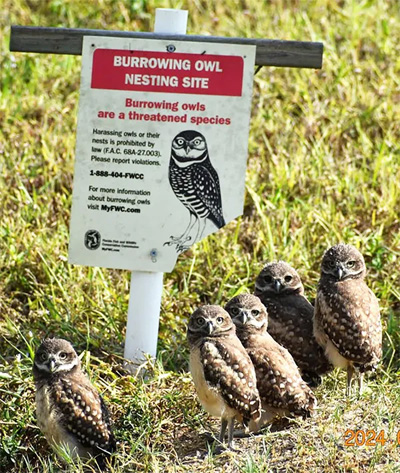
Cape Coral Has an Extraordinary Concentration of Burrowing Owls
According to Cape Coral Friends of Wildlife, the 2026 Cape Coral Burrowing Owl Census documented a record 7,828 burrowing owls and 6,792 burrows. Cape Coral is home to Florida’s largest known population of this threatened species.
Many of these owls live and nest in the open spaces found throughout Cape Coral, including vacant residential lots.
For a Cape Coral vacant-lot owner, a wildlife issue can quickly become a real-estate issue.
Why Is This Becoming More Important?
My name is Kevin Page, and I have been involved in Cape Coral real estate for approximately 35 years.
In my experience, burrowing owls and gopher tortoises on vacant building lots were not nearly the real-estate issue 10 or 20 years ago that they are becoming today.
Cape Coral continues to grow and vacant lots continue to be developed. Cape Coral Friends of Wildlife reports that as vacant lots disappear, so does important burrowing owl habitat, while development continues across the city.
From what I have seen over 35 years in Cape Coral real estate, this is an issue vacant-lot owners should understand.
Your lot may have no known owl or tortoise issue today. That does not mean conditions cannot change. Wildlife moves. Neighborhoods develop. Vacant land changes.
What is true about your property today may not necessarily be true when you’re ready to sell or build.
We are not trying to scare property owners or suggest everyone should rush to sell their vacant land. We are simply giving you information we believe you should have so you can make an informed decision about your property.
Why Does This Matter When You Want to Sell or Build?
A Burrowing Owl/Gopher Tortoise Affidavit is required as part of Cape Coral’s building-permit process. In the typical new-home transaction, the builder or contractor applying for the building permit must complete and sign the affidavit stating that the property and applicable surrounding areas have been inspected for Burrowing Owl and Gopher Tortoise burrows. The signed affidavit requires the applicant to report what was found and to accept responsibility for complying with the applicable wildlife requirements during development.
In other words, this wildlife review is not optional just because the current owner has never noticed an owl or tortoise. When a builder moves forward with a permit, the wildlife condition of the lot becomes part of the permitting process. If burrows are found, the permit applicant must address whether the required protection zones can be maintained or whether state or federal permits are necessary.
That means a wildlife issue you did not even know existed may become important the moment a builder seriously evaluates your property.
A builder looking for vacant land may have many other properties from which to choose. If one lot involves protected wildlife and another does not, the wildlife issue can influence whether the builder is willing to proceed at all. In my experience, builders are particularly sensitive to the added liability that can come with protected wildlife and often prefer to avoid that liability entirely.
That does not necessarily mean your property is unbuildable. But from a practical real-estate standpoint, a lot can be technically buildable and still be difficult to sell. In my experience, many production builders and other lot buyers simply do not want to take on the added time, cost, uncertainty, permitting requirements or potential liability associated with protected wildlife. Builders want to avoid liability wherever possible, so they may move on to another lot rather than make an offer. The result can be a much smaller potential buyer pool.
I Have a Burrowing Owl. Can My Lot Still Be Built On?
Possibly, yes. But buildable and readily marketable are not always the same thing.
One of the biggest misconceptions is that the presence of a burrowing owl automatically prevents a home from being built. Cape Coral Friends of Wildlife specifically addresses this misconception and explains that homes can be built on properties with burrowing owls under appropriate circumstances and protections.
Cape Coral’s current wildlife affidavit provides different protection requirements depending upon the situation, including larger protection areas for burrowing owls during nesting season. If the required protections cannot be maintained, additional permitting may be necessary.
Every property is different. Where the burrow is located in relation to the proposed home, driveway, utilities and other construction can make an important difference. Even when a lawful path to construction exists, many builders or buyers may decide they do not want the additional uncertainty, permitting requirements or potential liability and simply choose another available lot. That can leave an owner with far fewer potential buyers than a comparable lot without a known wildlife issue.
What About a Gopher Tortoise?
Gopher tortoises present a different issue.
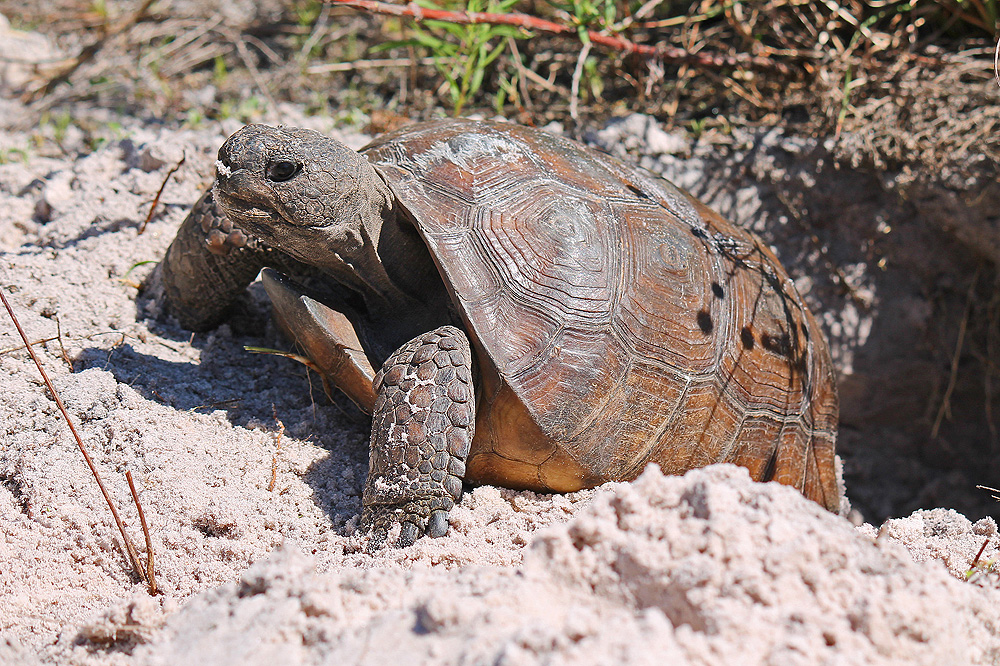
The Florida Fish and Wildlife Conservation Commission states that gopher tortoises and their burrows are protected under Florida law. Work within 25 feet of a potentially occupied burrow is considered a disturbance, and a relocation permit must be obtained before protected burrows are disturbed.
However, even the presence of a gopher tortoise does not automatically mean the lot cannot be developed.
If development can avoid the tortoise and its burrow by the required distance, a relocation permit may not be necessary. When the proposed development cannot avoid the protected burrow, FWC has established permitting and relocation procedures.
The important question is not simply, “Is there a tortoise?” It is: How does the wildlife actually affect this particular property and its future development?
How Do You Know If Your Lot Is Affected?
You may not.
Many Cape Coral lot owners purchased their property years ago. Some live hundreds or even thousands of miles away and may rarely, if ever, visit the property.
Cape Coral maintains information regarding known protected wildlife locations, but the presence or absence of wildlife on a vacant parcel should ultimately be evaluated based on current property conditions.
If there is an indication of protected wildlife on or near your property, a professional environmental survey may be an appropriate next step.
What is actually on the property today?
Once we know that, we can begin evaluating what it means from a real-estate standpoint.
Does an Owl or Tortoise Mean My Lot Is Worth Less?
Not necessarily. But value on paper and marketability in the real world are not always the same thing.
A comparable lot without a wildlife issue may suggest a certain market value, but that value matters only if a buyer is willing to make an offer. In my experience, many production builders and other lot buyers will simply pass on a property when protected wildlife creates additional uncertainty, permitting complexity or potential liability. That can leave a very small buyer pool even when the property may ultimately be buildable.
The effect on value and marketability can depend upon:
The first step is understanding the problem before trying to put a price on it.
Before You Accept a Heavily Discounted Offer, Know What You Own
If a builder, investor or other buyer tells you they do not want your property because of a burrowing owl or gopher tortoise, do not automatically assume that means the property cannot be sold or developed.
First, find out what is actually present. Then determine how it affects the property. Then consider your options.
You may ultimately decide to sell the property as-is. Or there may be another solution.
This Isn’t Just an Issue for Inexpensive Building Lots
Much of Cape Coral’s new construction occurs on ordinary residential building lots. But protected wildlife can also be present on waterfront and other premium vacant properties worth hundreds of thousands of dollars.
The underlying issue is the same. In fact, the more valuable the property, the more important it may be to understand the wildlife situation before accepting a substantial discount or assuming the property is difficult to sell.
Whether you own a $40,000 building lot or a significantly more valuable waterfront property, understanding what is actually on the land is important.
That’s Where CapeCoralLots.com Can Help
CapeCoralLots.com specializes in Cape Coral vacant land.
We are not an environmental company and we do not make wildlife determinations ourselves. Our role is the real-estate side of the problem.
For approximately 35 years, I have been involved in the Cape Coral real-estate market. That experience provides perspective on vacant-land values, builders, development and how issues affecting a property can influence its sale.
If you are considering selling a property that may have a burrowing owl, gopher tortoise or other wildlife issue, we can help:
Our objective is not simply to identify a problem. It is to determine whether there is a practical path toward selling your property.
Thinking About Selling Your Cape Coral Lot?
You do not need to become an expert on burrowing owls, gopher tortoises or wildlife permitting. If you are considering selling, contact us and we can start by reviewing the property with you.
Before assuming there is a problem, accepting a discounted offer, or deciding to simply hold the property for another five or ten years, send us the property address or parcel number through our existing Contact Us page.
Contact Us About Your Cape Coral Lot
CONTACT US ABOUT MY LOTDo You Know What’s on Your Cape Coral Lot?
Let’s find out before it becomes an issue when you’re ready to sell.
Kevin Page
The information provided on this page is for general informational purposes and should not be considered environmental, legal, engineering or regulatory advice. Wildlife conditions and regulatory requirements vary by property. Wildlife surveys, environmental determinations, permitting and mitigation services should be performed by appropriately qualified professionals and applicable governmental agencies.